Permanent exterior lights can look easy once it is up. The clean roofline, the neat color changes, the absence of expansion cables snaking across the lawn, everything suggests a simple upgrade. The fact is less flexible. A long-term system rests outside via heat, wind, rain, cold, dust, pollen, and the occasional ladder bump from rain gutter work. If it is set up well, it will certainly execute for many years with very little interest. If it is installed thoughtlessly, also a costs system can end up being a maintenance headache.
I have actually seen both outcomes. One home had a stunning setup that still festinated numerous seasons later due to the fact that the installer valued cable paths, sealed links properly, and left solution loops where they mattered. Another had lights that began falling short within months, not due to the fact that the LEDs were inadequate, but since the circuitry was extended tight, the power supply was undersized, and the clips were attached to dirty soffit panels in winter. The distinction was not luck. It was method.
Permanent LED Lights Installment incentives perseverance and penalizes shortcuts. If your goal is durable efficiency, the information below matter greater than lots of people expect.
Start with the house, not the lights
The initial error lots of people make is shopping by color effects before they recognize the structure the system has to survive. Rooflines differ greater than pictures suggest. Fascia boards can be irregular. Soffits may be aired vent aluminum, fiber concrete, plastic, timber, or composite. Seamless gutters can conceal installing room or develop awkward decrease points. A light run that seems basic from the driveway might entail corners, downspouts, development joints, or areas that get straight mid-day sun for six months of the year.
Walk the full border prior to you select a mounting technique. Seek the practical issues. Where will power get in the system? Exists an outside electrical outlet on a committed circuit, or will a new feed requirement to be added? Will the controller be sheltered but still accessible? Can the main cable course stay concealed without compeling sharp bends? Are there areas where snow moves off the roofing? Is the house siding old adequate to be brittle?
Those concerns are not extravagant, but they shape the durability of the whole task. Irreversible Holiday Lights are supposed to reduce inconvenience. If the installment neglects the building itself, the system comes to be yet an additional point to service every season.
Buy for electrical stability, not just brightness
A great deal of LED failures are truly voltage and link failings. The diode gets condemned since it is what went dark, but the origin commonly sits upstream. Good systems do not just advertise lumen outcome or app attributes. They provide clear electric specifications, weather-rated adapters, realistic run sizes, and power shot assistance when the run obtains long.
Brightness matters, however on a home outside, uniformity matters much more. If one section is crisp and another looks weak or colored because of voltage drop, the eye notices instantly. That is specifically real with cozy white setups. Several property owners want a subtle daily appearance rather than a vivid vacation display. If you seek Classic Warm Soft Lights for year-round visual allure, voltage security becomes a lot more essential. Soft white https://fixeddrivers767.trexgame.net/what-to-know-prior-to-purchasing-permanent-holiday-lights subjects variance fast. Uneven color temperature level across the roofline makes a premium installment look cheap.
Pay attention to the motorist or power supply score, the cord scale, the optimum supported pixel count or component count per run, and whether the controller can manage your designated layout without overwhelming networks. If the maker gives a range as opposed to a single set number, regard the traditional end if your climate is severe or your cord route consists of multiple edges and altitude changes.
The placing surface decides the hardware
Adhesive-backed clips look tempting because they assure speed and a tidy surface. In the field, they can be fine in slim usage cases and frustrating in many others. Surface area temperature level, dust, oxidation, and wetness all affect bond toughness. On older soffits, especially vented aluminum or textured vinyl, mechanical attachment normally sways adhesive alone.
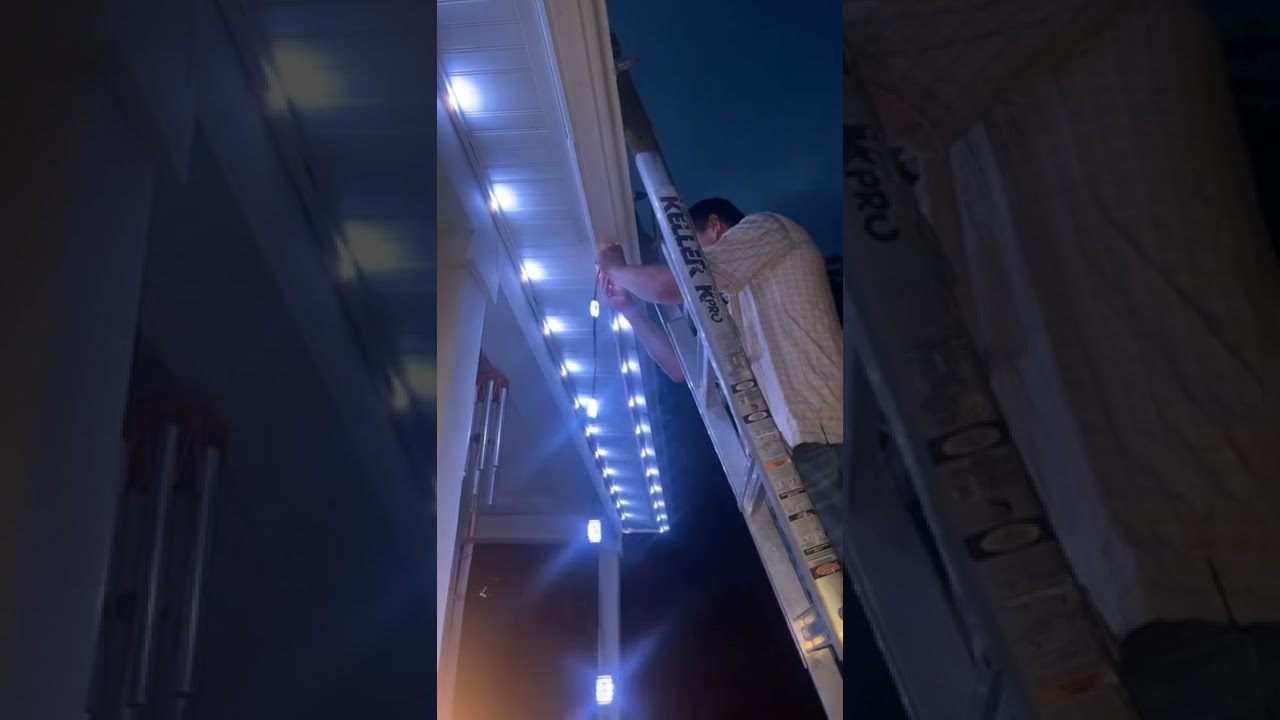
That does not indicate every installment ought to be riddled with visible screws. It means the accessory approach should match the substrate. Wood fascia may accept a tiny corrosion-resistant bolt very well. Aluminum trim may ask for purpose-built tracks or clips that prevent distortion. Vinyl expands and agreements, so a too-rigid attachment technique can develop stress and anxiety points over time.
The cleanest long-lasting installations normally hide the components a little under the sightline instead of placing them straight on the face of the trim. This shields the lights from some climate direct exposure and keeps the system discreet when it is off. It also changes exactly how the beam of light spreads throughout the facade. A refined put under the soffit can produce a smoother clean and lower the dotted appearance that some property owners dislike.
Placement is as vital as the product
A great installer thinks of sightlines from the road, from the front stroll, and from inside your house. A run that is completely directly from ten feet away might look uneven from the visual if fixture spacing does not make up roof covering pitch and architectural breaks. Corners are where many installs shed their gloss. If the spacing adjustments quickly or the cable bows outside, the eye goes right to it.
The objective is not simply to obtain lights onto the house. The goal is to make them look deliberate in daytime and seamless in the evening. That usually implies test-fitting a section prior to devoting to the full run. Buffoon up a couple of feet, step back, and examine the visual rhythm. You may discover that a small change internal creates much better camouflage, or that a reduced place point throws a cleaner light pattern.
One information that typically gets neglected is reflection. White soffits, shiny trim, and close-by home windows can jump much more light than anticipated. A bright RGB setup might look dynamic on the application preview however end up being extreme on the exterior. House owners who desire a permanent system for both holidays and day-to-day use frequently wind up using controlled white scenes the majority of the year. Preparation for that from the start leads to much better positioning choices.
Water management divides lasting installs from short-term ones
Exterior lighting does not fail since it got rained on. It fails since water discovered a method right into a powerlessness and remained there. Connectors hanging vertically without drip control, interlaces relaxing in debris-prone channels, controller boxes mounted where runoff gathers, these are the issues that come back later.
Every infiltration and every connection requires a water plan. If a wire enters a room, it must do so in a manner that urges water to drop away, not take a trip internal. If ports are weather condition rated, treat that ranking with regard as opposed to assuming it makes them indestructible. O-rings need to seat appropriately. Threads have to be totally tightened. Surfaces need to be tidy prior to securing. A percentage of entraped grit can jeopardize an or else strong connection.
Drip loops are not exciting, but they function. So does avoiding reduced places where cord can being in pooled water. So does offering the enclosure a little breathing space from the wettest component of the wall surface. In humid climates, condensation matters practically as long as rain.
I once took a look at an unsuccessful section where the proprietor was encouraged the lights were faulty. The real problem was a controller box mounted straight underneath a roofing valley where drainage hammered it during tornados. The box itself was rated for exterior use, yet the installment location invited problem. Transferring it a couple of feet to an extra protected place addressed the problem.
Leave slack where solution will eventually happen
Tight wire runs appearance neat on mount day. They also placed pressure on ports, edges, and clips as your house relocates through seasonal expansion and tightening. A little handled slack, particularly near terminations, corners, power shot factors, and controller links, offers the system a better chance of making it through both weather condition and future service.
This does not mean loose loops drooping into view. It means thoughtful solution allocation. A professional needs to have the ability to change a failed module or reprise a link without requiring to reconstruct a whole area. If the cord is cut to specific stress all over, one little repair service can become a big one.
The same principle relates to the controller place. Mount it where a person can access it without balancings. Someday, firmware may require upgrading, a fuse may need monitoring, or a connection might need reseating. Hidden is excellent. Unreachable is not.
Power preparation should have even more attention than it gets
Undersized power is one of one of the most common reasons permanent systems act unpredictably. You may see lowering toward the far end of a run, shade shift on intense scenes, arbitrary flicker, or resets when the system tries to display high-demand patterns. This worsens in long runs and in cooler problems when electrical components can act differently under load.
A noise strategy represent total component matter, wire size, voltage drop, startup behavior, and scene use. A house owner might claim, honestly, that they usually desire cozy white at modest illumination. The installer still needs to build for occasional full-output usage if the system offers it. Or else the installation only functions perfectly within a narrow operating window.
Here are the power considerations that usually shield lasting efficiency:
Size the power supply with headroom rather than to the specific calculated load. Keep cable runs within the producer's advised limits and use power injection when required. Match cord gauge to range and present need, not simply to what is easy to source. Put controllers and power products on a stable, secured circuit with rise protection where appropriate. Label feeds and terminations so future solution does not end up being guesswork.That small amount of technique conserves a great deal of fixing later.
Heat and sunlight quietly shorten system life
People usually bother with freezing temperature levels, but maintained warmth and UV exposure can be equally as penalizing. South- and west-facing sections often age differently from shaded altitudes. Plastics become fragile. Adhesives damage. Cable jackets dry out faster. Rooms mounted in straight sun can run hotter than anticipated, specifically if they are dark colored and tightly sealed without any consideration for thermal buildup.
If your home has one altitude that takes harsh afternoon sun, make use of that details. It might warrant upgraded products, a different placing strategy, or a controller location out of direct exposure. The same home can have extremely various problems from front to back.
This is one more factor to avoid the most inexpensive accessory elements. The LEDs might serve, however clips, cable television jackets, gaskets, and real estates often expose where expenses were cut. A long-term exterior system is not the location to save a few dollars on the parts that manage the weather.
Don't ignore expansion, movement, and regular home maintenance
Houses move. Seamless gutters get cleaned. Painters appear. Roofing professionals drag tubes and particles. Siding expands in summer season and agreements in winter months. If the illumination design does not allow for regular building life, the lights will eventually shed that fight.
A practical setup prevents evident problem zones. Maintain cable televisions free from areas where gutter tools will certainly snag them. Do not obstruct accessibility to fasteners that future service providers may require. Avoid squeezing cord under trim pieces that are likely to be removed later on. If a roofing substitute may happen within a couple of years, talk with that now as opposed to after the lights are up.
One of the best habits is documenting the installation with photos before everything mixes into the outside. Capture controller places, hidden cable television courses, splice points, and power feed paths. Months later on, those images can conserve an hour of exploratory disassembly.
Color choice impacts just how the system obtains used
Many purchasers originally concentrate on computer animated shade scenes, which makes sense. It becomes part of the charm. But a lot of long-term systems invest the majority of their life on moderate settings or shut off. That is why home owners who prioritize everyday visual allure typically gravitate toward cozy white programs over showy patterns.
Classic Warm Soft Lights have remaining power because they flatter most outsides. Block, stone, repainted trim, and warm-toned exterior siding all tend to react well to that combination. It feels architectural instead of seasonal. If that is your key usage situation, review it prior to the set up. Component spacing, illumination calibration, and placement depth can all be tuned toward a cleaner warm-white presentation.
Permanent Vacation Lighting ought to be versatile, yet flexibility functions best when the foundation is refined. A system that looks sophisticated on a quiet Tuesday night will still be capable of doing something joyful in December. The reverse is not constantly true.
Plan for solution before you need service
No outside lights system is completely maintenance cost-free. That expression obtains utilized too freely. Low upkeep is sensible. No maintenance is not. Even a strong installment gain from routine inspection. The good news is that the checklist is short if the initial work was done well.
A functional upkeep routine typically includes the following:
- Inspect noticeable clips, tracks, and fasteners one or two times a year Check rooms and adapters after severe storms Remove particles build-up around controller boxes and cable pathways Test agent scenes at full brightness occasionally, not just reduced white settings Update controller software program only when the manufacturer plainly recommends it
Those five steps capture most concerns prior to they end up being annoying.
The install day information that matter greater than people think
Weather on install day impacts outcomes. Adhesives and sealants act in different ways in cool or damp conditions. Dirt from close-by cutting can contaminate bonding surfaces. Hurrying to beat sunset tends to produce negative corner job and improperly clothed cable. If problems are wrong, the professional action is frequently to postpone a portion of the work rather than force it.
Surface prep additionally should have even more regard. Tidy means actually tidy, not simply aesthetically acceptable from a ladder. Chalky oxidation, pollen movie, and fine grit all decrease adhesion and concession securing. On some exteriors, a proper wipe-down modifications everything.
Then there is attaching technique. Overdriving a tiny screw can split plastic mounting parts or misshape slim trim. Underdriving leaves movement that aggravates with wind. The installer's touch issues below more than the instruction sheet.
I have likewise discovered to be doubtful of "concealed enough" cable television management. If you can see a cord from one angle today, you will keep seeing it for life. Tiny corrections during installment are low-cost. Living with them is not.
When do it yourself can work, and when it most likely should not
Some house owners are fully capable of mounting their very own system, particularly on a one-story home with straightforward rooflines, accessible power, and a solid understanding of low-voltage or line-powered accessory systems. Persistence and preparation can create an extremely commendable result.
The risk climbs swiftly when the home has several degrees, long complex runs, personalized control areas, or any type of unpredictability around power supply sizing and weatherproofing. High ladders transform the equation. So do unusual surface areas and surprise water drainage concerns. If you are uncertain whether you are making the system correctly, that unpredictability itself is useful information.
Professional setup is not nearly getting it done quicker. It typically means fewer visible compromises, much better wire directing, and an extra dependable electrical design. The worth ends up being noticeable a year or more later, when the system is still working cleanly via warm front, winter months climate, and holiday use.
What long-lasting efficiency actually looks like
A successful Permanent LED Illumination Installation is typically quiet. The lights respond when asked, stay off when not required, and do not promote their equipment. The shade remains constant throughout the run. Warm white appearances warm white, not cream on one side and light blue on the other. The controller stays dry. The cord does not droop. Solution access exists, but it remains concealed from daily view.
That level of performance is not mystical. It comes from matching the equipment to your house, intending electrical tons with margin, installing attentively, safeguarding every link from water, and valuing the truth that exterior systems live hard lives.
Permanent Vacation Lights are among those upgrades that can really feel luxurious when they are done right. They can likewise feel like a problem when corners get reduced. The installer's technique, more than the sales pamphlet, figures out which variation you wind up with. If you approach the job with perseverance and focus to the much less extravagant information, the payback is a system that festinates every year, whether it is radiant with Traditional Cozy Soft Lights on an average evening or lugging the full shade of a holiday display.